Dancing Skeleton Christmas Ornament PNG Review
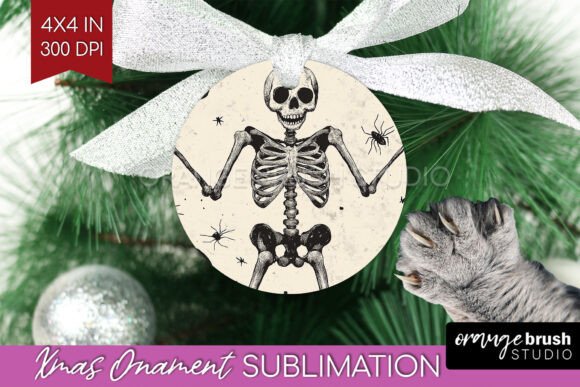
When I first opened the file for the Dancing Skeleton Christmas Ornament PNG, my initial reaction wasn't about the technical specs or the pixel count. It was about the vibe. There is a specific energy in holiday embroidery that can either feel cheesy and generic or clever and charming. This design lands firmly in the "clever" camp. As someone who has stitched hundreds of festive pieces for clients, I know exactly what makes a holiday design work on fabric versus how it looks on a screen. The skeleton theme immediately suggests a niche audience—those who love a little gothic flair mixed with traditional holiday cheer. It is not your average reindeer or snowman, which means it carries a higher potential for standing out in a crowded marketplace like Etsy or at a local craft fair.
The visual personality of the Dancing Skeleton Christmas Ornament PNG is lively yet structured. For an embroidery designer, the layout is critical because we are translating a 2D image into 3D stitches. The character appears to be mid-motion, which creates dynamic lines that translate well into satin stitch outlines. However, the "dancing" aspect requires careful consideration regarding the stitch density. If the limbs are too thin, they might get lost in the fabric weave, but if they are too thick, the movement will look stiff. My first impression is that this design has excellent potential for a statement piece, likely to appeal to teenagers, young adults, or anyone who feels that standard Christmas decor is a bit too saccharine for their taste.
Real-World Application: From Screen to Stitch
Let's talk about where this actually shines in a practical setting. I recently considered using this design for a custom holiday gift line targeting boutique owners. The concept was a set of embroidered kitchen towels featuring various spooky characters, with the Dancing Skeleton Christmas Ornament PNG taking center stage. On paper, it sounds perfect, but in execution, the choice of fabric matters immensely. A white cotton tea towel would make the skeleton pop beautifully, especially if paired with bright red and green threads. The contrast between the dark outline of the skeleton and the festive colors creates a sophisticated, modern aesthetic.
However, consider a different scenario: a sweatshirt for a small business merchandise drop. Here, the texture of the fleece changes everything. Embroidery on heavy knit fabrics often sinks slightly, which can soften the details of a complex figure like a dancing skeleton. If the design includes tiny decorative elements, such as sequins or very fine running stitches for the bones, those might disappear into the pile of the sweatshirt material. In this case, the design works best as a chest pocket applique or a large back print rather than a small left-chest logo. The sheer fun of the character demands space to breathe, so placing it on a tote bag allows the full height of the figure to be appreciated without the distortion that comes from curved surfaces.
I also envision this design thriving on baby items, provided the color palette is adjusted. While the skeleton theme is edgy, parents often want something cute for their little ones. If the skeleton is rendered in soft pastels rather than stark black and white, it becomes a unique nursery decoration or a keepsake blanket. The key here is the finish; the stitching must be smooth to ensure comfort against a baby's skin. A dense fill stitch around the edges could be too rigid, so a combination of satin stitch for the outline and lighter fill stitches for the body would maintain the playful mood while ensuring the finished product remains wearable and safe.
Where to Exercise Caution
Not every surface is a good match for this particular design. If you are planning to use the Dancing Skeleton Christmas Ornament PNG on a cap, you need to think about the curvature. Caps have a tight radius, and any design with long vertical lines or wide horizontal spans can get distorted. A dancing skeleton with outstretched arms might look squashed on a baseball cap, losing its intended motion. Similarly, small hoop sizes are a trap for this type of artwork. If you try to condense a detailed skeleton into a 4x4 hoop, the intricate bone structure will turn into a muddy blob of thread. The design simply needs room to express its personality.
Textured fabrics present another challenge. Think about corduroy, terry cloth, or heavy denim. These materials eat up thread and can obscure fine details. If the skeleton's fingers or facial features rely on thin lines, they will vanish on a textured background. Furthermore, stretchy fabrics like jersey or spandex require a stabilizer that is robust enough to prevent puckering. Without proper stabilization, the tension of the embroidery machine pulling the thread can warp the fabric, making the skeleton look lopsided or uneven. Always test the design on scrap fabric that matches the final project material to see how the thread interacts with the weave.
Design Notes for the Professional Maker
Before you commit to a full production run, there are several technical steps every serious designer should take. First, check the stitch density. A high-density design on a light fabric can cause the material to pucker, ruining the drape of a garment. Conversely, low density might not cover the fabric adequately, leading to a patchy look. Review the file to see if the fill stitches are optimized for the fabric type you intend to use. If the design is intended for commercial embroidery projects, ensure that the file format is compatible with your machine software.
Thread color selection is paramount for the Dancing Skeleton Christmas Ornament PNG. Since the original is a PNG, you are free to choose your own thread palette, but consistency is key for brand identity. If you are selling these as part of a collection, stick to a cohesive color story. Using metallic threads for the bones could add a luxurious touch, but be aware that metallics can break more easily and may require a larger needle eye. Also, consider testing the design in black and white mockups before ordering materials. This helps you visualize the contrast and ensures that the negative space is balanced correctly.
Licensing is another non-negotiable factor for craft business owners. Even though this is a digital product under the Crafts category, you must verify whether you are allowed to sell finished items created with the design. Some licenses restrict the number of units you can produce, while others allow unlimited commercial use. Failing to check these terms can lead to legal issues down the road. Additionally, inspect the small details closely. Are there any stray pixels or jagged edges in the source file? These imperfections can become glaring errors once converted to stitches. A clean source file results in a cleaner finished product.
Ultimately, the value of the Dancing Skeleton Christmas Ornament PNG lies in its ability to tell a story. It transforms a simple holiday ornament into a character with attitude. When used correctly, it elevates a handmade product from a generic gift to a conversation starter. Whether you are creating personalized gifts for friends or building a boutique brand, this design offers a unique angle that separates you from the competition. Just remember to respect the limitations of the medium, test thoroughly, and let your creativity guide the stitching process. With the right approach, this design can become a signature piece in your portfolio, proving that even the most unexpected themes can shine when executed with professional care.